When I started this bath soak business, I thought I could just make whatever I wanted to make. Use good raw materials, make pretty packaging, build something that satisfies even me — and people who'd like it would naturally show up.
I don't think that's wrong, exactly. I don't think making myself the product's first persona is a completely mistaken approach. Starting from my own real dissatisfaction, from what I genuinely wanted to use myself, at least gives a clear answer to "why am I making this."
But wanting to make a product, and being the only one who wants it, are two completely different things.
Once I actually started making products, I found there was far more standing between "what I want to make" and "what I can actually make" than I expected. There's money. There's MOQ. There's whether it can even be manufactured. There are containers, there are regulations. And most realistically of all — even if I make it, can it actually sell?
Wanting to make things is always in plentiful supply
Once you're making products, ideas keep sprouting like a sweet potato vine. Using someone else's bath soak: wouldn't this part be better if it were different? Traveling, stepping into an onsen: wouldn't it be amazing if I could bring this feeling home? Smelling a scent, looking at a raw ingredient, looking at packaging — new product ideas just keep coming.
The problem was never a lack of ideas. It's the opposite.
Wanting to make too many, and being able to make none of them at once
A big company can test several products at the same time and let a few fail while moving on to the next. For a small brand, deciding to make even one more product is a real hit. One more product isn't just one more SKU. You need to make the contents, order containers and packaging, design it, photograph it, write the product page, and find space to hold the inventory. All of that needs real money.
MOQ, a very real wall
There's a word you run into constantly making products: MOQ, minimum order quantity.
"I'd like to make just this small amount first and see how people respond" — a manufacturer usually can't do that. Preparing raw materials, running the equipment, setting up a production line all need a minimum volume, understandably, from the manufacturer's side too. But for a small brand, that "minimum" is nowhere near minimal.
Packaging is the same story. The contents can sometimes be produced in a smaller batch, but boxes need to be printed by the thousands. The container I really want exists — but its MOQ is too high. Cut the quantity down, and the unit price shoots up.
So the realistic compromises start, one by one, from the product I originally pictured. Should I use this container instead? Should this ingredient wait for the next product? From here, product development becomes less about adding what I want and more about deciding what to give up.
Honestly, disliking this exact feeling is why we set up our own small factory and registered as a cosmetics manufacturer — at least for bath soaks, I wanted to develop and make things directly, in our own direction, without the pressure of an MOQ.
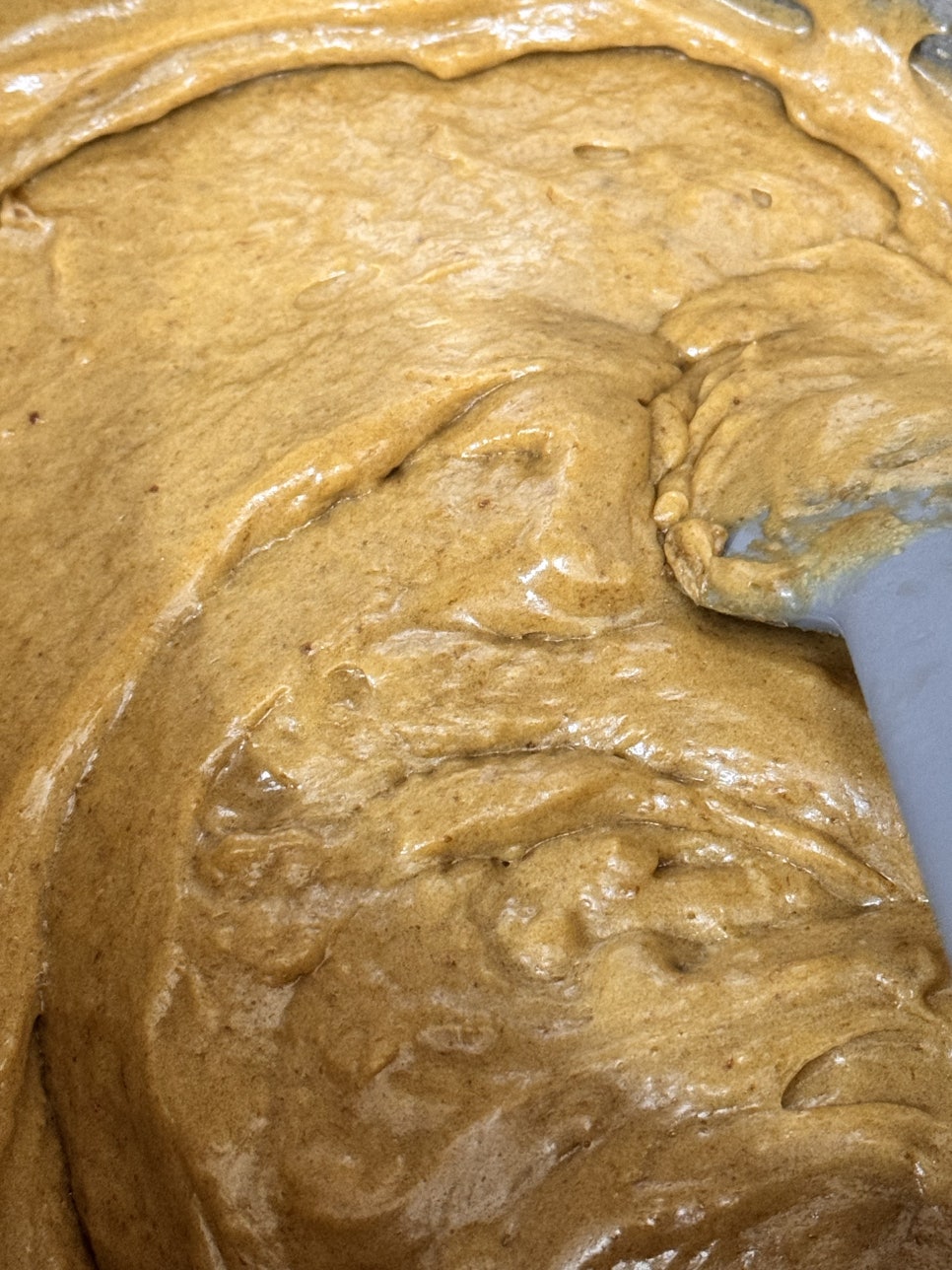
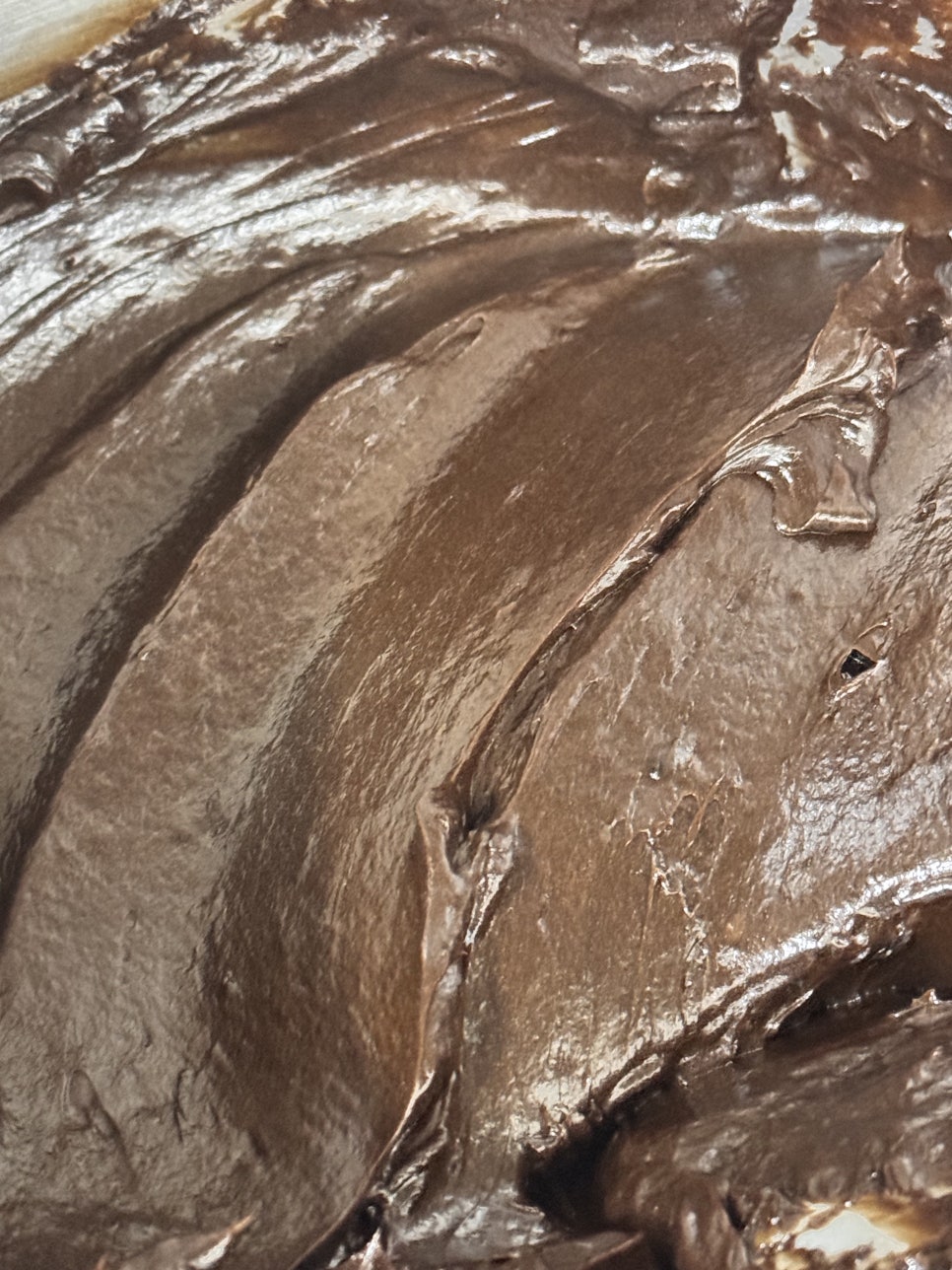
But being a small factory, we can't produce everything ourselves. Below are test shots of cleansers we never actually brought to the world — they really do contain fresh tomato, mini cabbage, and seaweed.
Developing those, we still had to find an OEM manufacturer. But visiting several, the problem turned out to be more than just MOQ — it was that we couldn't mass-produce them the way we wanted at all. I'd personally tested and locked in the exact texture I was after, but other factories' equipment and production methods just couldn't reproduce it. We eventually found a company willing to "give it a try," handed over the recipe, and waited months — only for the result to fail. Some samples came out as an entirely different formulation than what we'd intended. Months of testing, searching, and waiting, for products that never made it out into the world.
Before I actually started making products, I thought a good idea plus a good recipe equaled a product. In real product development, the gap between "can be made" and "can be mass-produced" is a lot wider than that.
Good ingredients alone don't make a good product
At first, naturally, I wanted to throw in every good ingredient I could think of — I want this, I want that too. But loading a formula up without limits raises the cost too high to sell at, can change the scent, color, and texture, and needs every combination checked against every other ingredient.
Most importantly, I learned that a consumer doesn't buy a product to read the ingredient list — they buy the actual experience of using it. No matter how many good ingredients you pack in, if the scent isn't great or the texture is unpleasant, no one reaches for it a second time. On the flip side, even a simple ingredient list can be plenty good, if the moment of using it is genuinely enjoyable and makes you want to come back.
So these days, instead of asking "what should I put in, and how much," I try to ask first: "what kind of moment do I want to give the person using this?"
What I like and what the customer wants are also different
This is another thing I keep learning by making products. My own taste is clear — and it's definitely not a "mainstream" one. Just because I like something doesn't mean the customer necessarily will. There's someone out there who loves a scent I thought was just okay, and someone who loves a foam or a color I never gave a second thought to.
In the US, plenty of reviews say our half-bath soak smells great. In Japan, the reviews say the scent isn't great. And sometimes, on the part I was genuinely most confident about, the customer shows no particular reaction at all.
At first, this was pretty disorienting. Should I go with my own taste, since it's my brand? Or match the direction people actually want? I still don't really know the answer. But I don't think it's a problem you solve by picking only one side. Holding onto the direction the brand wants to stand for, while continuously watching what people actually want — the product probably comes out somewhere in between.
The scariest thing isn't failing to make a product — it's it not selling
Probably the scariest thing for a small brand is making a product this carefully, and it just not selling.
While you're making it, you're always confident. This is genuinely good, right? This much, and people will like it, right? But the moment it's finished, an entirely different fight begins — because nobody knows it exists yet. You have to announce it, explain it, photograph it, build content around it, advertise it. And even after doing all that, it might not sell as much as you'd hoped. What's left after that is inventory.
So every time a new product idea comes up now, I feel excited — and I'm reaching for a calculator at the exact same time. How many should I make? Can I actually sell them all? Is it okay for this much money to sit tied up in inventory for months? Before running a brand, I had no idea I'd end up thinking this way.
So these days, "not making it" is also a decision
I used to think that when an idea came, I had to somehow turn it into a product. It's a little different now. A good idea doesn't necessarily mean I have to make it right now. Whether our brand is at the right point for this particular product, whether it fits well alongside what we already make, whether I can actually sell and explain it properly, and — most importantly — whether the brand can still stand after making it. I think through all of that too.
So some ideas just sit in my head, exactly as they are, for months. It stings a little, but I've stopped thinking of that as failure. For a small brand, the courage to make one more product, and the courage to decide not to make it right now, seem to matter equally.
Still, in the end, I want to make what I want to make
That said, I don't want to think only in realistic terms and make only the products that seem likely to sell. If that were the whole plan, there'd be no real reason to run my own brand at all.
What I actually want is to keep narrowing the distance between what I want to make and what I can actually make. What I gave up early on because of cost might become possible once we've grown a little more. A container I can't touch right now because of its MOQ might be something I can freely order someday. Even an idea I can't realize today — if I keep this brand going, the day might come when I can.
So instead of asking "why can I only manage this much," I try to ask "how close can I get to what I want, within what's possible right now?" Running a small brand might just be this exact choice, repeated over and over — giving up what needs giving up, keeping what needs keeping, and slowly, slowly getting closer to the brand I first imagined.
There's still a lot I can't make yet. But I hope that someday, one by one, I get to release the things that only exist in my head right now into an actual tub.
A long holiday, rolling around the house, mumbling to myself. Fighting — let's do our best.