Last December, we took a family trip to Kurokawa Onsen village — somewhere I'd wanted to visit for a while, finally done as a one-night stay with family. I'd expected December in Kurokawa to be quite cold, but it turned out milder than expected — good weather both for walking the town and for sitting in an open-air bath.
Kurokawa is a place where several ryokan gather together in the mountains, forming one small onsen village. Each ryokan has its own distinct spring, and the village is famous for onsen pilgrimages — wandering between ryokan, soaking in one open-air bath after another.
The ryokan we chose for this trip: Ryokan Sanga. One reason I picked it was that I believed it belonged to Japan's Hitou (Secret Onsen) Association. After booking, checking again closer to the trip, I found it wasn't on the list anymore. By then it was already booked and there wasn't much time left, so we went ahead as planned.
Smaller than expected
Sanga sits a bit away from the center of Kurokawa Onsen village. Looking back now, I've got a ton of onsen photos and somehow not a single one of the ryokan itself.
My first impression on arrival: smaller than I thought? From the photos, I'd expected a bigger scale, but the lodge itself turned out to be on the smaller side. That wasn't really a disappointment, though — if anything, because it wasn't large, it felt quiet, and the old wooden buildings, stone paths, and surrounding trees all blended into a genuinely good atmosphere. Less a grand, luxurious ryokan, closer to a small Japanese inn settled quietly into the forest. I personally like that kind of atmosphere, so my first impression was pretty favorable.
The part I was most curious about: Sanga's open-air bath
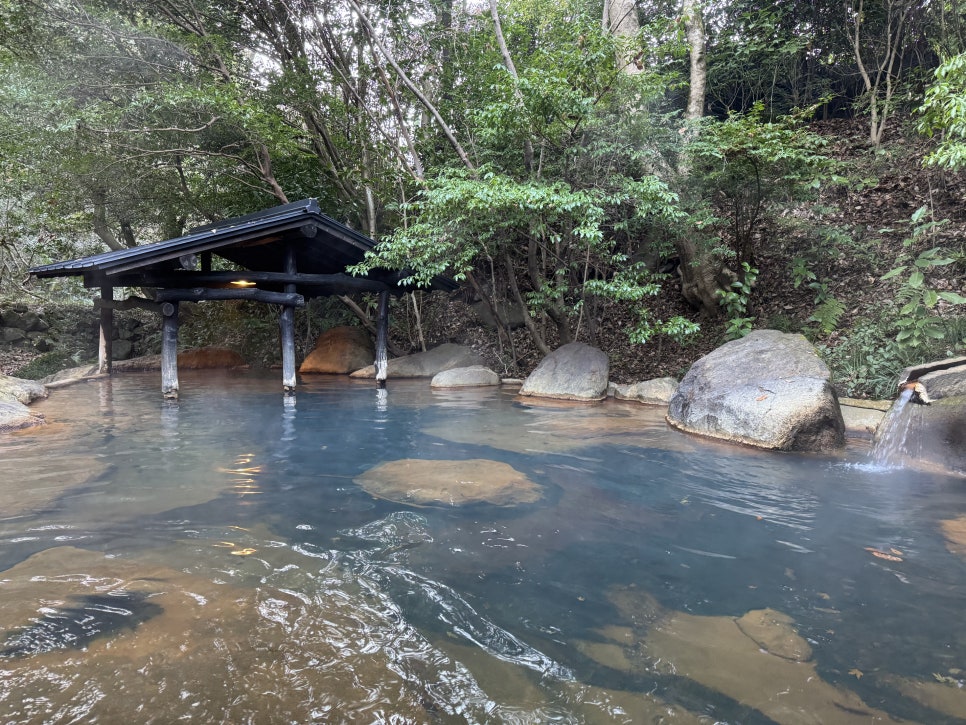
And of course, the part I was most looking forward to was the bath itself. In photos it looked spacious, almost grand — in person, the open-air bath, too, was smaller than expected. Definitely more compact than the pictures suggested. The trees and bushes around it were thick enough that it isn't a wide, open-view bath either.
But maybe that's exactly Sanga's own particular atmosphere. Rather than an open, panoramic bath, it feels like soaking in a spring tucked deep into nature.
The women's open-air bath uses Sanga's spring No. 2, with a water type described as sodium chloride–bicarbonate–sulfate. The name is a mouthful, but simply put, it's water carrying several mineral components centered on sodium — combining a chloride spring's long-lasting warmth with a bicarbonate spring's smooth bathing feel, in one complex water type.
The water itself wasn't especially slippery, as I recall — but coming out of the bath, my skin definitely felt smoother.
The family bath was a bit of a letdown
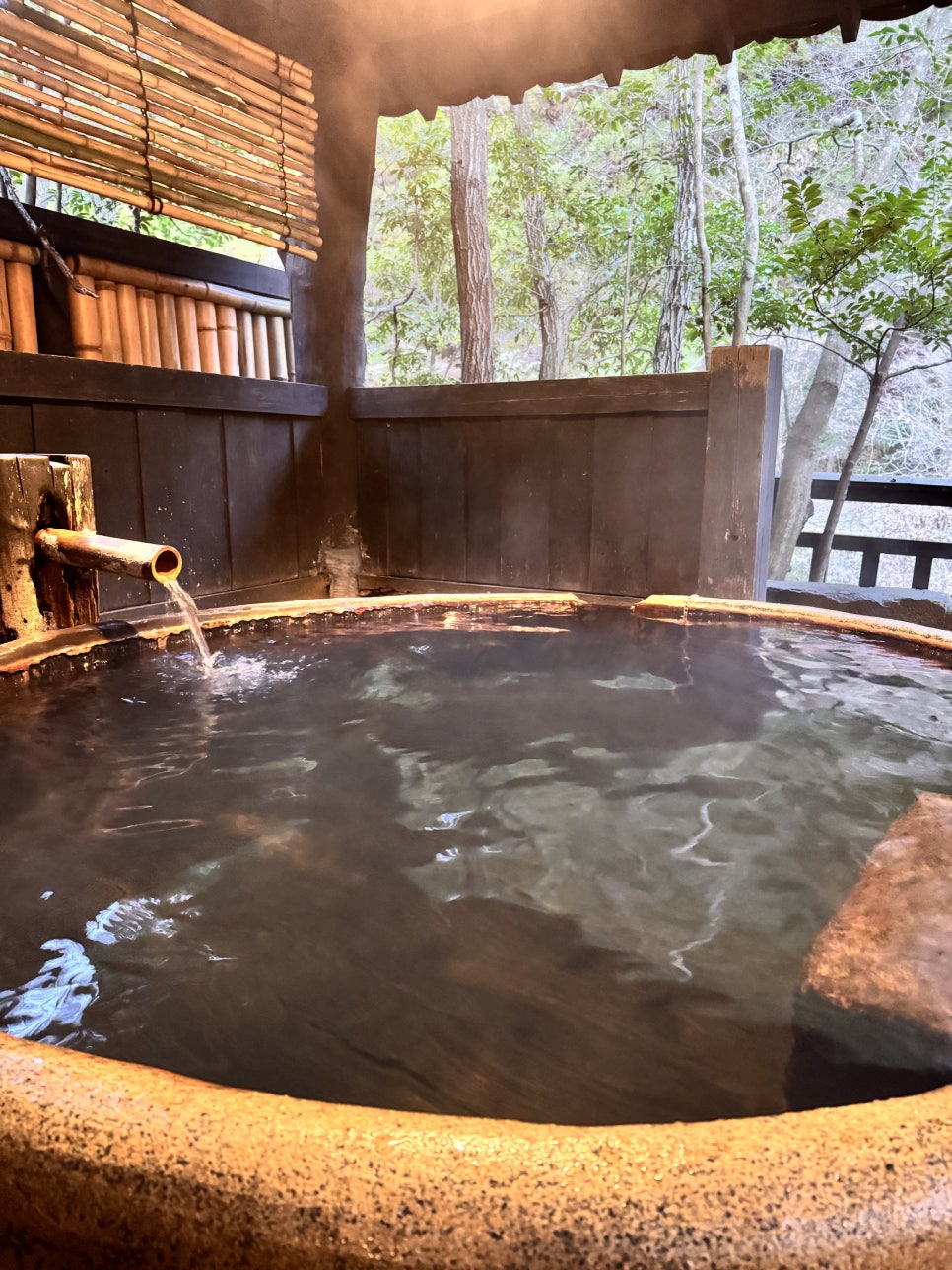
Sanga also has a family bath you can use together, and we tried it too. When we used it, the hygiene wasn't especially satisfying. Being an older ryokan, aged facilities and clean upkeep are two different things, I think — and personally, I wish the family bath had been kept a little cleaner. The overall atmosphere and the open-air bath were both to my taste, but this part, honestly, was a letdown.
The kaiseki, though, was genuinely satisfying
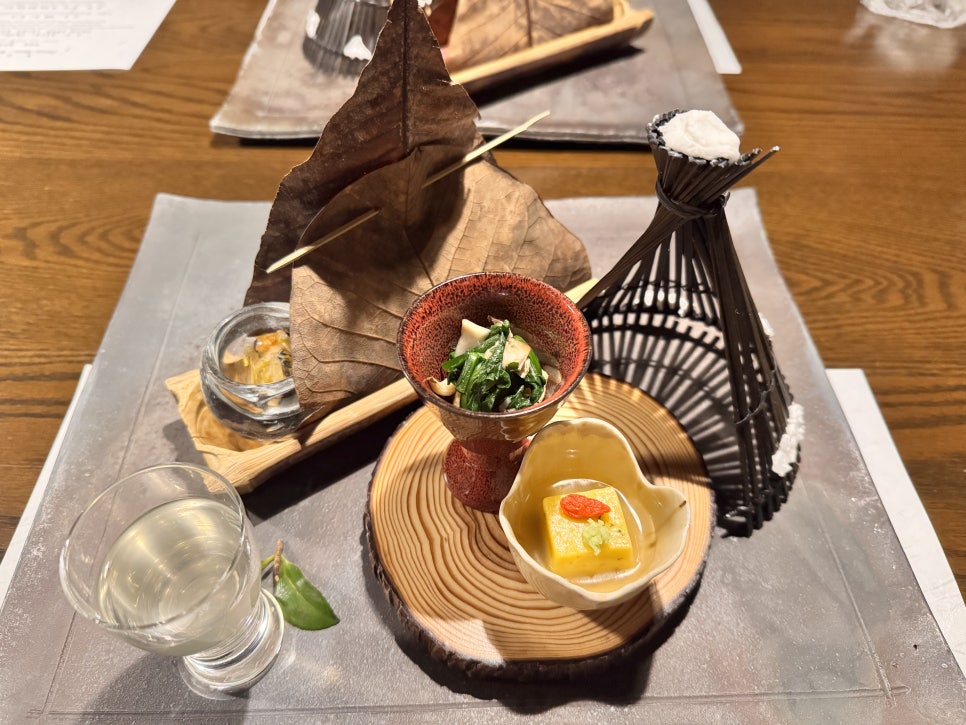
Nothing looks particularly special dish by dish, but plated together it becomes something — Japanese-style presentation at its best. I was too busy eating to take many photos.
Oh — I did get one. Grilled fish. Japan really is good at this.
Beer after the bath, of course
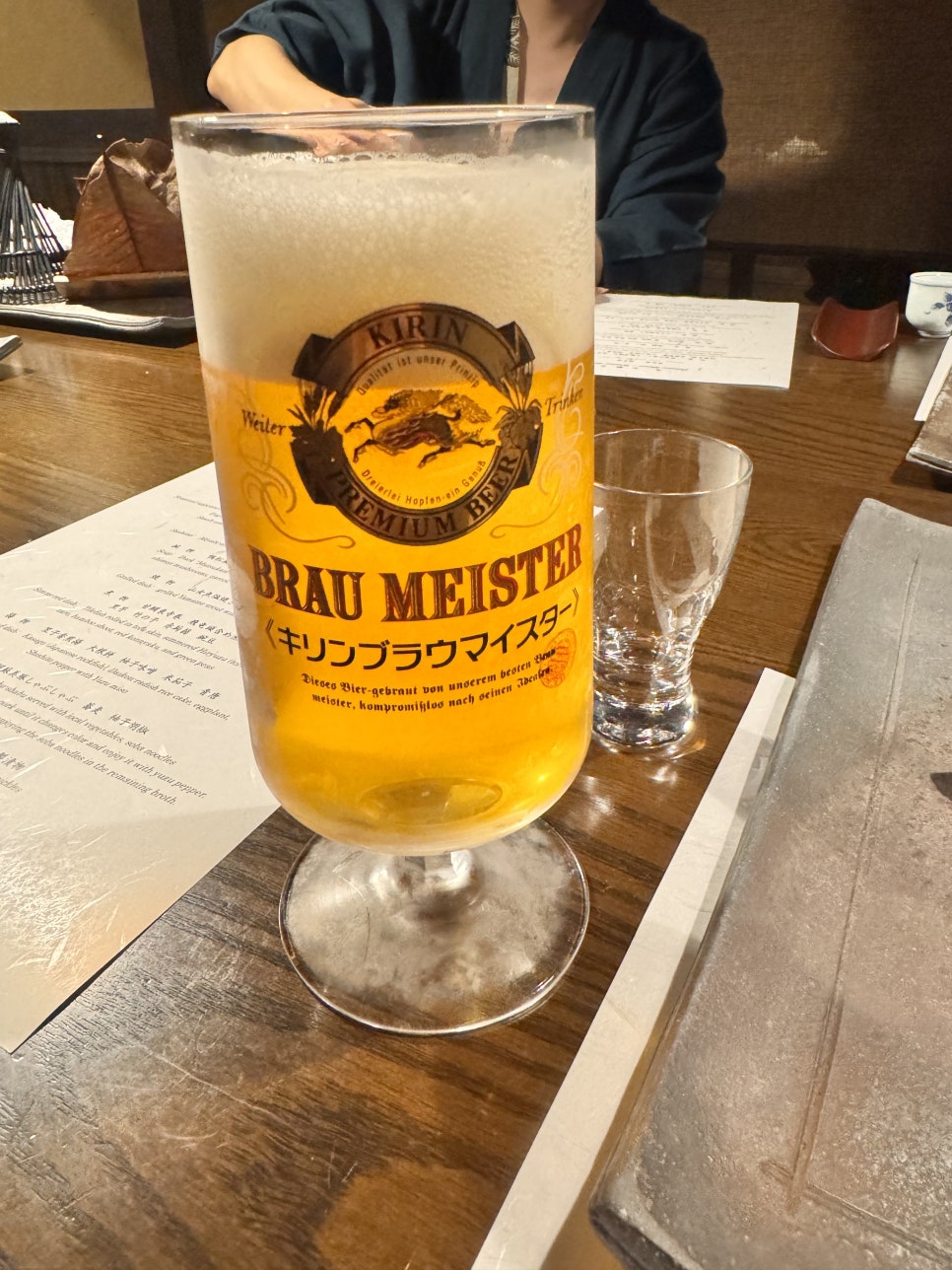
A cold beer paired nicely afterward, and then some sake too — more than one glass, if I'm honest.
The verdict: Sanga's kaiseki was, on the whole, deeply satisfying. Course after course stretched the meal out quite a while, but chatting with family while eating slowly was genuinely fun. Bathing at a ryokan, wearing a yukata, having an unhurried dinner — that feels like the complete set of an onsen trip. Especially since the family bath had been a bit of a letdown, the meal's satisfaction pulled the overall stay's rating right back up.
Fed, so back to the bath, obviously
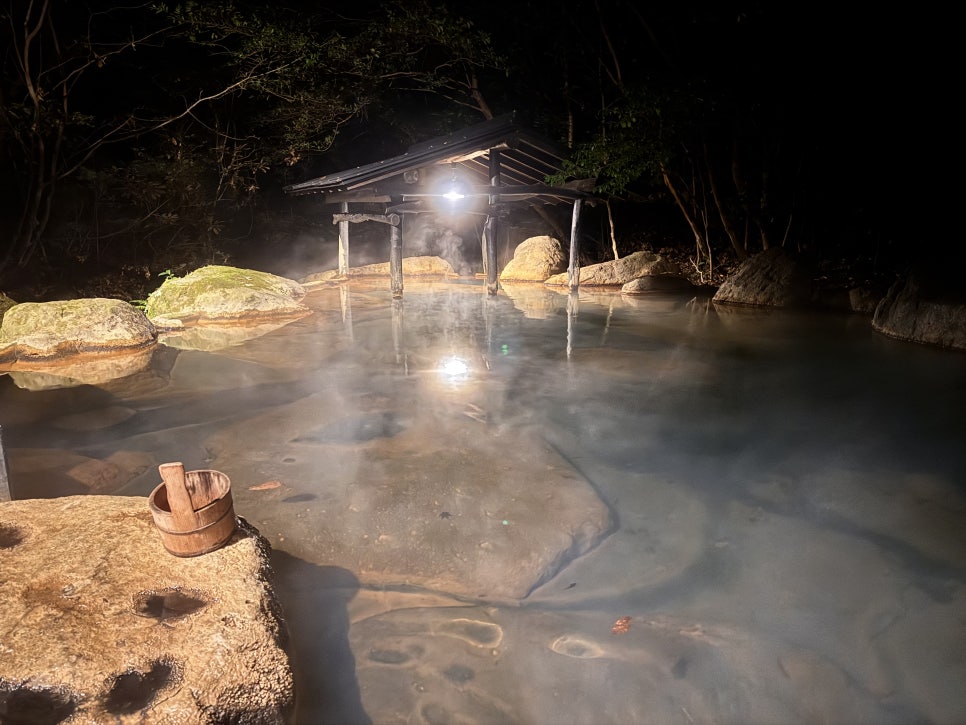
Full from dinner, we went back to the onsen. Getting every last bit of value out of it, you could say.
Once on arrival at the ryokan, once more after dinner, and once more the next morning — at a ryokan, I need a minimum of three soaks before I feel satisfied. And somehow, even that never quite feels like enough. If I could, I'd want to just live inside an onsen every day.
The night bath had a completely different mood from daytime. During the day, the surrounding trees and bushes made it feel cozy; at night, with everything pitch dark around it, it was oddly a little scary — especially with Sanga's thick surrounding bushes. Still, scary or not, we enjoyed it thoroughly, right to the end.
Then a bottle of milk after the night bath, obviously. Body fully warmed, straight to sleep.
Onsen → kaiseki → onsen again → milk → sleep. That's about as perfect as a day at a ryokan gets.
Ryokan Sanga, in hindsight
Looking back on our one night at Sanga, it wasn't a flawless stay. The lodge and the open-air bath were both more modest in scale than the photos suggested, and the family bath's hygiene was personally a letdown.
Even so, the overall satisfaction was quite high. More than anything, Sanga's particular atmosphere was good — wood and stone, old wooden buildings, an open-air bath tucked in among them. Rather than being memorable for scale or grandeur, it's the feeling of spending a day at a small, quiet forest ryokan that's stayed with me.
The kaiseki was satisfying, and thinking about the unhurried time spent bathing and eating with family, this was a good choice of lodging for this particular trip.
Kurokawa Onsen Ryokan Sanga 6961-1 Manganji, Minamioguni, Aso District, Kumamoto 869-2402, Japan