Our first product wasn't actually made to be used on feet
The first product we launched was a women-only medicinal mugwort bath soak. The goal was clear: use it in the bath, and only in the bath. We built the formula around "when soaked in a full tub," and every line of the product page was written with bathing in mind.
Then, browsing through reviews on US Amazon, I found something surprising: people talking about foot soaks. And the same review kept showing up, over and over — "my foot calluses got noticeably softer."
We got curious too, so we tested it
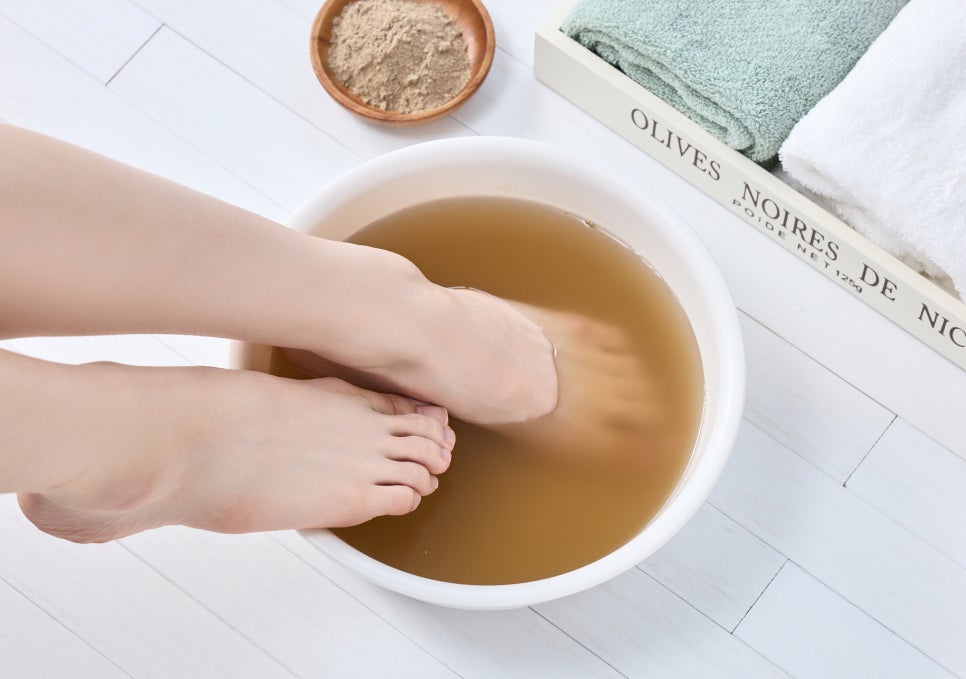
Reading the reviews wasn't enough — we wanted to know for ourselves whether it actually worked on calluses. So we tested a foot soak directly, in a basin.
The method was simple:
- Water around 40°C (104°F)
- Fill a basin up past the ankle
- Add about 10g of the mugwort soak and soak for 15–20 minutes
We repeated it daily for about a week, and the hardened, tightly packed callus on the heels and soles noticeably softened. It doesn't peel off on its own, but afterward, using a callus file felt much easier.
The reasoning makes sense: soaking your feet in warm water lets the stratum corneum absorb moisture and swell, and adding mugwort and mineral-type ingredients makes the skin surface even more supple. During a full bath, that same effect is spread across your whole body — concentrate it on the smaller area of your feet, and it feels much stronger.
Customers don't only use a product the way we intended
Compared to Korea, the US already has an established foot-spa, foot-soak market. So it seems natural that customers receiving our product adapted it themselves: let's use this our way — on our feet.
We had one intended use in mind. Actual customers were using the product far more freely than that. That was one of the more striking lessons of running this brand. Reading the reviews taught me that the maker's intention and the user's actual method aren't always the same thing.
Customer reviews widened what the product is for
After that, I started thinking: for someone without a bathtub, or for whom a full-body soak is a hassle, a mugwort foot soak could be a great option too. Especially on a day you've been standing or walking a lot and your feet feel dry and rough — you don't need to fill an entire tub, you can just do this.
Eventually, based on real experience shared by US Amazon customers, we added foot-soak instructions to the product page ourselves. It wasn't part of the plan when we first designed the product, but through how customers actually used it, the product's range widened on its own.
A product keeps learning after it launches
When you're making a product, you assume you know it best — which ingredients went in, how it should be used, which customer it's for. We decided all of that ourselves.
But once you start selling, customers use the product in ways you never anticipated. In that process, you discover strengths you didn't know were there, or you learn about a discomfort you missed entirely.
So these days, I don't just glance at Amazon star ratings. I read more carefully — when, where, and how a customer actually used the product. In there might be a hint for how to rewrite the next product description, or a whole new customer we hadn't discovered yet.
Launching a product doesn't seem to be where development ends.
Sometimes, more than the person who made the product, it's the customer actually using it who finds the real possibilities.
Mugwort Epsom & Himalayan Pink Salt
$29.90 · 12.3 oz jar · 4.3★ (28)